
Adipose Derived Stromal Vascular Fraction (SVF)
unique opportunity to get treatment at a reduced cost
At our center, we are doing both basic science research combined with clinical treatment on fat-derived mesenchymal cells. Below is a brief description of some of our work: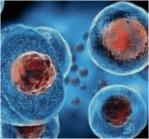
Cellular treatment has the potential to change the balance in joints from progressive damage and degeneration to an environment of healing. Adipose tissue (fat!) is abundant and easily accessible. There are literally millions of cells trapped within the supportive tissue (stroma) that holds the fat cells. With cellular therapy, we are interested in the cells and the many factors that these cells produce. With cellular therapy, the goal is to isolate the cells and remove the fat.
Using enzyme to process fat
There are 2 primary methods of processing the fat. One method is using an enzyme to dissolve the stroma that releases the cells into solution. Then centrifugation can concentrate the cells for injection. This method however is restricted in many countries including Israel, most of the USA and Europe. In our initial research we studies methods of using enzyme to process fat (link here to the article). We were able to show that fat contains many stem cells that under the right conditions are capable of turning into bone or cartilage. In addition, the number of cells in fat after enzymatic processing was about 2.4 million per milliter or 19 million cells in the nearly 8ml that was available for injection. This is a tremendous number of cells available for treatment after a simple mini liposuction.
Using mechanical methods to process fat
Another method that is allowed uses mechanical methods to separate the fat (and then discard) leaving the cells and some supporting stroma for injection. These mechanical methods may include cutting, washing, and centrifugation to name a few. These mechanical methods were previously thought to be inferior but now are considered in some ways to be superior since the cells attached to stroma may be more effective and viable.
Future methods to improve quality and quantity
Although we are currently using mechanical methods that we believe are the best available, we are continuing to do research to find even better methods. Racheli Sharon-Gabbay during her PhD work at the Hebrew University of Jerusalem learned statistical methods that we applied to previously published work to find optimum methods for improving the quantity and quality of cells (link here to the article). We have published one article and are currently and actively working on the next generation of methods.
Clinical study
We recently completed the enrollment period of a clinical study. Patients with painful knee arthritis were enrolled in the study. All had moderate to severe pain and many had knee replacement already recommended. We injected one knee with the mSVF (stem cells) and the other with saline. The patients did not know which side was injected with which material. We are seeing them at 3 months, 6 months and 12 months. We are currently analyzing the results. Overall 81% of the knees injection with the stem cells had significant improvement. So in 20% there was no improvement. However, in the 80% that did improve, their pain improved from 7/10 to 2/10. We found this very encouraging. We are currently in the process of submitting the research for publication. This study was generously funded by the IMRF Fund.
What do you actually do when you treat?
We begin the process with a mini-liposuction. We use a very small cannula (about 2.5mm diameter) to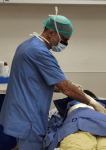 manually aspirate fat. The procedure is done in a mini operating room under local anesthetic. We use sterile technique so that we can re-inject. This takes 30-40 minutes depending on how much fat we need. The more joints that we inject, the more fat we need to harvest. The next step is to process the fat. After removing the fluid and debris from the lipoaspirate, we use special cutting filters from Korea (Adinizers) to cut the fat into smaller and smaller pieces until they are microscopic (down to 100 microns). After centrifugation the material is ready to inject. This processing takes about 45 minutes and the injection takes about 10 minutes which we do after some local anesthetic. Depending on the joint, we can inject
 directly or use ultrasound to guide the injection. The entire process takes about 2 hours.
How can I get treated with stem cells if I am interested and how much does it cost?
We are currently giving patients the opportunity to have treatment for an introductory price. ALL of the money goes towards cost of the procedure and NONE of the money is for profit. We are doing this while we continue to refine our methods. In the future we will offer treatment as a private service. If you are interested in getting treatment you can contact Chaya at knee@szmc.org.il. If accepted, we would invite you for an evaluation to include examination. You will need to bring X-rays so that we can determine the extent of the arthritis. We can then schedule the procedure. We are currently charging only 10,000 nis (approximately $3250) for the first joint, 12,000 nis for two joints and 13,000 nis for 3 joints (In the USA they charge $10,000 0r 31,000nis for the first joint and 50% for each additional joint).
What arthritic joints are you injecting?
We are currently focussed on the knees. However, we have injected thumbs, toes, hips, elbows and shoulders. We are open to consider joints that are arthritic and painful
What are the risks and is it painful?
There are very low risks but no procedure is completely without risks. The donor site (usually from the flank) may be mildly painful for a few days. The risk of bleeding or infection is very low. We have not had any complications to date. Although we inject your own cells, you can have an inflammatory reaction sometimes the same night or sometimes it can last 2-3 days that can cause significant knee pain. We ask people to minimize their activities for 3 days after the injection and no sports for one week.
How long does it take until I can expect improvement?
It can take weeks or months to feel improvement. Most patients have reported improvement within 3 months of the injection.
How successful is the treatment?
Overall, based on published data and our experience, there is an 80% chance of significant improvement. We would like to make that better and this is what drives the research part of our program.
How do I schedule an appointment?
Email Chaya at: knee@szmc.org.il
 Dr. Gershon Zinger